Can Online Couples Therapy Work for Couples in Louisiana and Texas?
Can online couples therapy actually work?
Or are the two of you going to sit in front of a laptop talking about some of the hardest parts of your marriage while secretly thinking, "There is no way this is the same as being in the room?"
I understand the hesitation. Couples therapy already asks you to do something uncomfortable. You have to talk honestly about the relationship, say things you may have avoided saying, and listen when your spouse tells you something you may not want to hear. Putting a screen between everybody can seem like one more obstacle.
But online couples therapy has become a legitimate option for a lot of couples, and the research we have so far is encouraging.
It is not automatically better than meeting in person. It is also not a watered-down version of couples counseling.
For the right couple, it can work very well.
What does the research actually say?
This is where I would be careful with big promises.
There is not a magic percentage of couples who will improve simply because they choose online therapy. But researchers have directly compared couples therapy delivered over video with therapy delivered face-to-face.
In one randomized study, couples receiving the same relationship intervention either in person or through videoconferencing improved in relationship satisfaction, mental health, and other outcomes. The researchers did not find meaningful differences between the two formats.
A larger study involving more than 1,000 people receiving couples therapy also found that teletherapy and in-person therapy produced broadly similar improvements.
There is also a growing body of research on digital relationship interventions more generally showing that online approaches can improve relationship satisfaction.
So the question is no longer really, "Can anything useful happen through a screen?"
It can.
The better question is whether online couples therapy makes sense for your relationship and what the two of you are dealing with.
Does it feel different from being in the room?
Sometimes.
I provide both in-person counseling in Lake Charles and online counseling, and I would not pretend they are identical experiences.
Sitting together in an office has some obvious advantages. I can see more of the room. There are fewer technological distractions. Some people simply feel more connected when everybody is physically together.
Online therapy has its own advantages. You may be sitting on your own couch instead of rushing across town after work. You do not have to add a commute to an already packed evening. And if you live somewhere without the kind of therapist you are looking for, you are no longer limited to whoever happens to have an office twenty minutes away.
For some people, being in a familiar environment also makes it a little easier to settle in and start talking.
The therapeutic relationship still matters online. Research comparing video and in-person psychotherapy generally has not found a major difference in how clients rate that relationship, although some couples-specific research suggests it may develop somewhat differently online.
That does not mean online therapy is less real.
It means the therapist has to be intentional about making sure both people feel heard, involved, and connected to the process.
What actually changes when couples therapy is online?
Less than people sometimes expect.
We are still talking about the relationship. We are still slowing down the arguments. We are still looking at what happens when one person pushes and the other shuts down. We are still working through resentment, trust, intimacy, communication, betrayal, and whatever the two of you keep getting stuck on.
The screen changes the logistics.
It does not eliminate the work.
There are a few things that matter more online, though. You need privacy. You need a reasonably reliable internet connection. Both people need to be able to hear the conversation clearly. Phones, kids, work emails, televisions, and everything else happening around the house can become distractions pretty quickly.
I also want to know what we will do if the connection drops or somebody gets disconnected in the middle of an important conversation.
Those details sound small until you are halfway through talking about something that really matters.
Sometimes online therapy solves the biggest problem: getting there
This is one of the reasons I continue to offer both in-person counseling in Lake Charles and telehealth throughout Louisiana and Texas.
A couple may genuinely want counseling and still have a logistical problem.
One spouse works twelve-hour shifts. The other has to get the kids somewhere. Someone travels for work. They live an hour from the nearest therapist they would actually want to see. Or they need someone with experience in something more specialized than ordinary relationship conflict.
It is much easier to keep putting therapy off when every appointment requires rearranging half the day.
Online counseling removes some of that friction.
Instead of asking whether you can both leave work, find childcare, drive somewhere, attend the appointment, and drive home, the question may simply become whether you can protect an hour of privacy.
For some couples, that is the difference between talking about starting counseling and actually starting it.
Specialized care can matter more than the ZIP code
This becomes especially important when the relationship problem is not simply, "We argue too much."
Maybe there has been an affair.
Maybe one spouse recently discovered years of hidden pornography use.
Maybe there has been compulsive sexual behavior, secrecy, or repeated discoveries.
Maybe the person who was betrayed is trying to figure out what is true while the other spouse is trying to understand what recovery even looks like.
Those situations can involve more than ordinary communication problems.
If sexual betrayal is part of what brought you here, you may benefit from a therapist who understands both the relationship and the specific issues surrounding betrayal trauma.
If pornography or compulsive sexual behavior is part of the picture, specialized porn and sex addiction therapy may also be appropriate.
Online therapy can make it possible to work with someone who has experience in those areas without requiring you to live near that therapist's physical office.
For couples in Beaumont, Port Arthur, Orange, and the surrounding Golden Triangle, you can also read more about specialized therapy options in Southeast Texas.
When online couples therapy may not be the best fit
Online therapy is not automatically the right choice for every couple.
If you have no private place to talk, therapy can become difficult very quickly. If one of you is constantly checking email, walking around the house, answering texts, or tending to other things during the session, it is going to be harder to stay engaged. Technology can also become an issue if your connection is consistently unreliable.
More importantly, some relationship situations require additional assessment before ordinary couples therapy is appropriate.
If there is ongoing violence, coercive control, intimidation, fear of retaliation, or another significant safety concern in the relationship, simply putting both partners together on a video call is not necessarily safe or appropriate.
Those situations need to be assessed individually.
The same can be true when a couple becomes so escalated that neither person can remain safely engaged in the session.
Sometimes we can adapt. Sometimes in-person work makes more sense. Sometimes conjoint couples therapy is not the right starting point at all.
Can we do online couples therapy from different locations?
Yes, sometimes.
Many couples join from the same room. Others occasionally need to join from different private locations because of work, travel, or scheduling.
What matters is that we can hear each other, maintain privacy, and have a setup that allows both partners to actually participate.
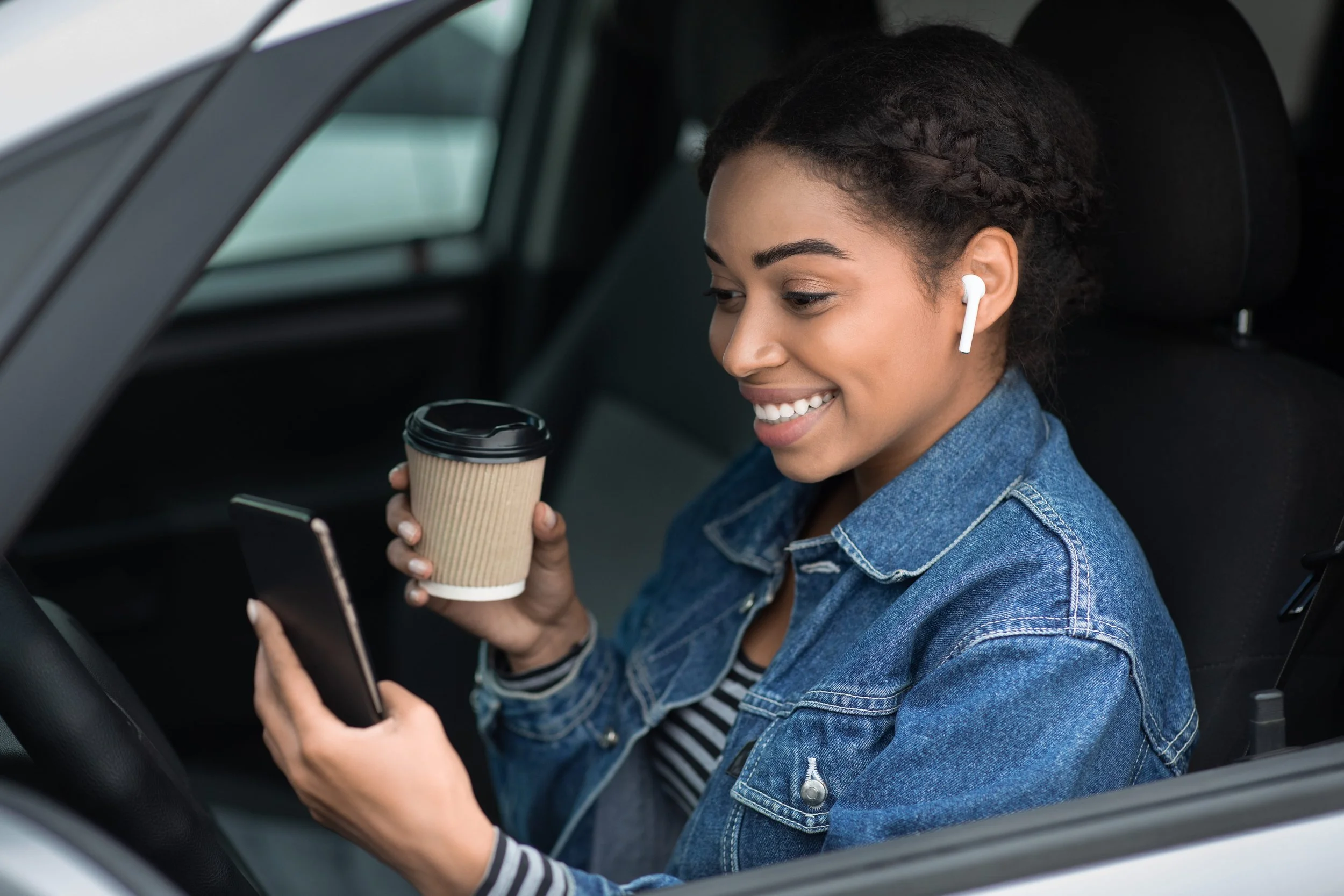
I do not conduct couples therapy while either person is driving. If you are joining from a vehicle, the vehicle must be safely parked for the entire session. If someone begins driving during the appointment, the session has to stop until the vehicle is safely parked again.
The same goes for privacy. I would not conduct a couples session from somewhere other people can overhear the conversation. You may be discussing sensitive details about your marriage, sexuality, betrayal, or other personal concerns.
And if you are going to protect an hour for your marriage, protect the hour.
Close the laptop tabs. Silence the notifications. Put the phones down unless you are using one for the session.
Let this be the thing you are doing for that hour.
What matters more than whether therapy is online
The format matters.
But it is not the only thing that matters.
The therapist's experience matters. The fit between the therapist and the couple matters. Whether both partners feel like the therapist understands them matters. What brought you to counseling matters. And what the two of you do between sessions matters.
A screen does not prevent good couples therapy.
A screen also does not magically create it.
Online therapy is simply another way of getting two people, their relationship, and a therapist into the same conversation.
The actual work is still the work.
Online couples counseling in Louisiana and Texas
At Woods Counseling Services, I offer couples counseling in person in Lake Charles and through telehealth for clients in Louisiana and Texas.
I am licensed in both Louisiana and Texas, which allows me to work online with clients located in either state.
Online counseling can be especially useful for couples who live farther from Lake Charles, have demanding work schedules, travel frequently, or are looking for specialized help with relationship conflict, sexual betrayal, pornography, or sex addiction recovery.
If you are trying to decide between online and in-person counseling, you do not have to make the format into a bigger decision than it needs to be.
Ask yourselves a few simple questions.
Can we have a private conversation where we are?
Can we protect the time?
Are we both reasonably comfortable talking through video?
Is the therapist we want to work with available online?
If the answers are yes, online couples therapy may be a very reasonable place to start.
This blog is for informational purposes only and does not create a therapist-client relationship. Telehealth and couples counseling are not appropriate in the same form for every relationship. If there is violence, coercive control, intimidation, or concern for someone's immediate safety, individualized assessment and appropriate safety resources may be needed.
Brent Woods, MA, LPC-S, CSAT, is a licensed professional counselor and owner of Woods Counseling Services in Lake Charles, Louisiana. He provides in-person counseling in Lake Charles and telehealth throughout Louisiana and Texas.